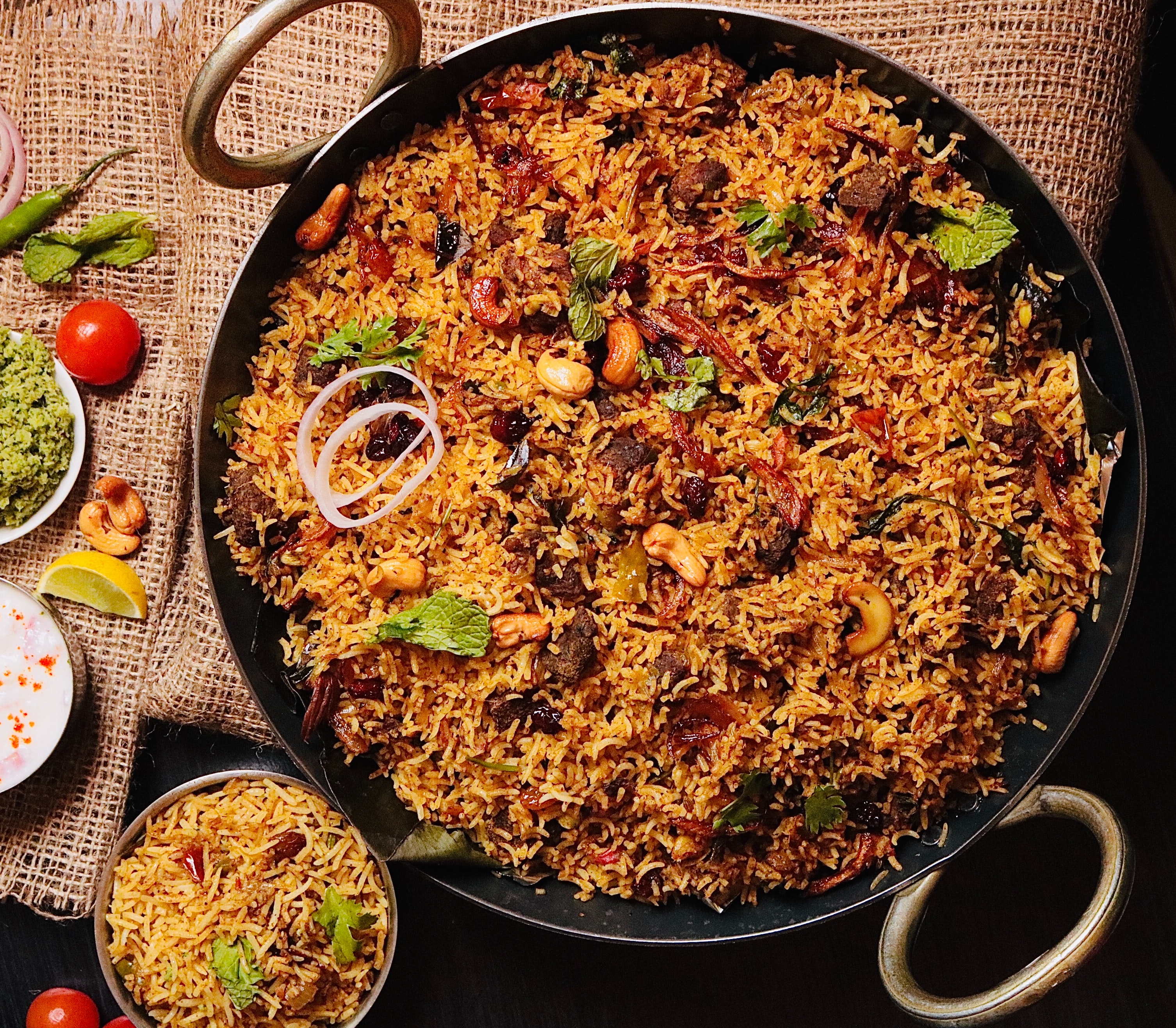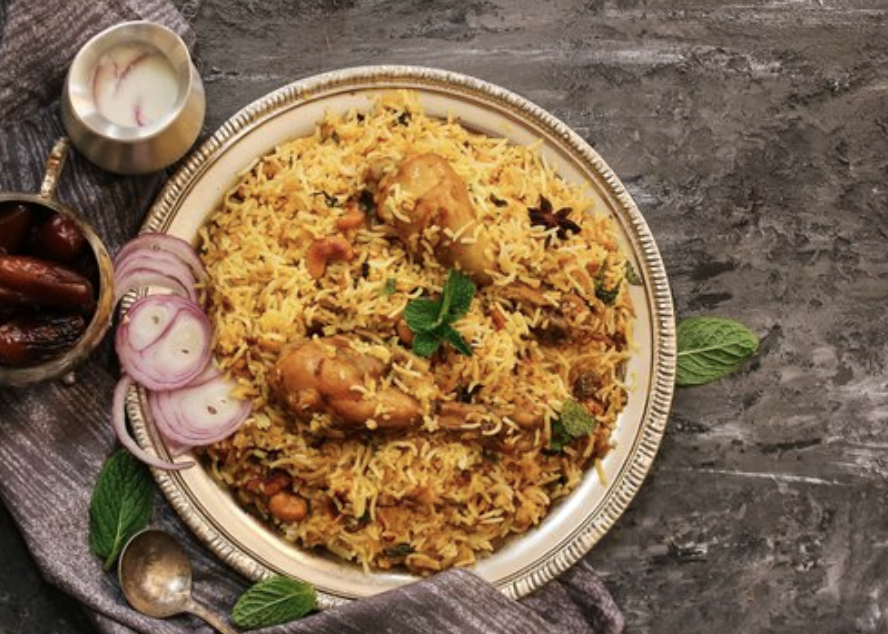
Biryani is a staple of South Asian culture, served at every occasion — from weddings and family gatherings to holidays, or simply as a comforting everyday meal. It comes in many forms and is loved by millions. There’s chicken biryani, my personal favorite, along with beef, fish, and countless regional variations such as Hyderabadi biryani. Let’s explore this flavorful dish and the history behind it.
Biryani holds a special place during Eid, one of the most important Muslim holidays. There are two major Eids: Eid al-Fitr, which marks the end of Ramadan, and Eid al-Adha, celebrated after the completion of Hajj. During these festivals, biryani symbolizes joy and brings families together in celebration. The key ingredients include long-grain basmati rice, the meat of choice marinated in yogurt and spices (or vegetables for vegetarian versions), biryani masala, fried onions, and fresh coriander for fragrance. The dish owes its rich flavor to a vibrant mix of spices — most notably turmeric, red chili, and garam masala. To make it even more enjoyable, it’s often served with raita or chutney, refreshing yogurt-based condiments that balance the spice.
The origins of biryani are widely debated. Some trace it back to Persian cuisine, where fried rice was known as birinj biriyan, introduced to the Indian subcontinent during the Mughal Empire. Others argue that similar rice dishes already existed in India and were later refined into biryani. Over time, both regions developed their own versions: in Iran today, the dish evolved into spiced meat wrapped in thin bread rather than rice. It’s fascinating how one dish can travel across borders, adapting with each culture while retaining its symbolic meaning of togetherness and celebration.
Let’s look closer at how biryani is celebrated in Pakistan, my home country. Pakistani biryani shares many similarities with Indian versions, reflecting how food unites neighboring cultures. Yet, it also boasts unique regional twists. For instance, Karachi biryani is known for its bold spice and chili-rich raita. Sindhi biryani is more colorful, often featuring dried plums for a tangy contrast. Lahori biryani is milder, focusing on a perfect balance between meat and spice. My favorite, Bombay biryani, includes fried potatoes that add irresistible flavor and texture.
Overall, biryani is a dish everyone should experience at least once. With its endless variations and deep cultural significance, it embodies the warmth and diversity of South Asia. From India to Iran to Pakistan, biryani connects people through shared flavor and celebration — proving that one humble dish can carry the story of an entire region.