As September comes to an end and fall officially begins, students across the country are settling into the new school year. Each year, children are reintroduced to school lunches—some bring homemade meals, while others rely on their school cafeteria to provide nutritious, heart-healthy dishes. However, these meals differ greatly across the globe, as each culture prioritizes different aspects to meet their students’ needs.
In the United States, school lunches are a recurring topic of discussion among families, committees, and even national groups. Typically, dishes are designed to be efficient and easy to prepare, allowing families to assemble meals quickly. Common foods include peanut butter and jelly sandwiches, chicken nuggets, fries, and mozzarella sticks—chosen for their convenience rather than their nutritional value. Many of these meals are pre-made and frozen to meet the demands of large student populations and limited cafeteria staff.
In the 1900s, industrial farming and advances in fertilization led to food overproduction, and these surplus ingredients were often distributed to schools regardless of their health benefits.
Those who pack sandwiches at home often aim to create a balanced, all-in-one meal, combining carbs, protein, and vegetables. Most include deli meats and cheeses, such as turkey and provolone, often layered with lettuce or other greens. While school-provided lunches appeal to students with their taste and familiarity, many students now favor healthier, more varied options. Concerns about high sodium intake have prompted calls for more balanced meals that mix whole foods with the occasional treat. Though the debate over American school lunches continues, current options still prioritize convenience and the preferences of picky eaters.
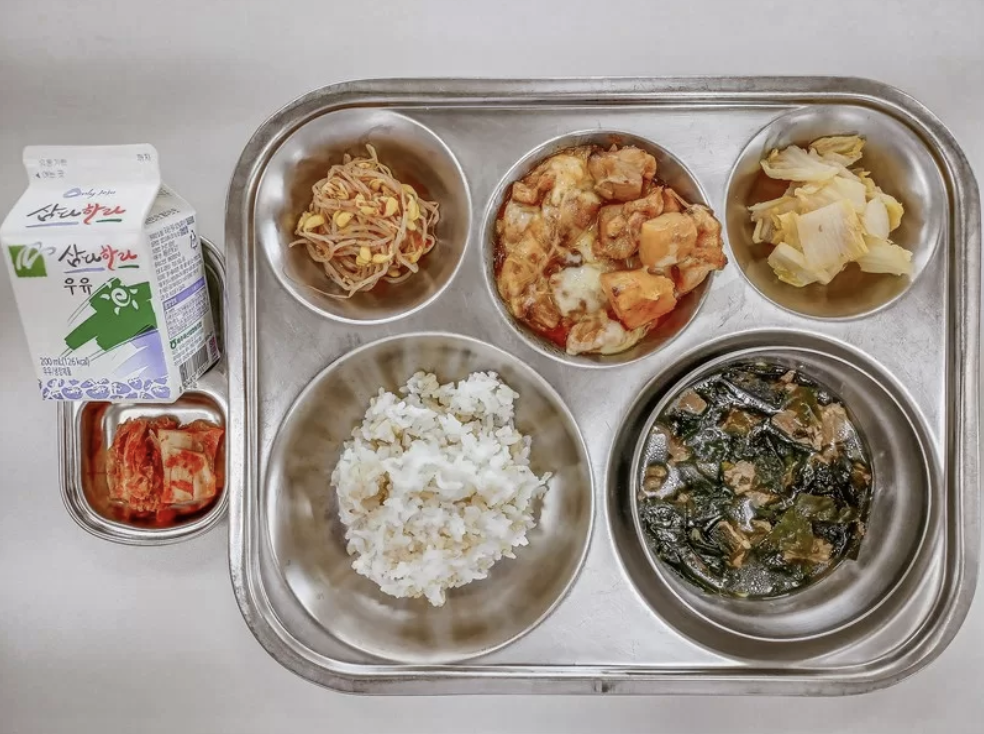
In contrast, South Korean school lunches emphasize balance and nutrition, with common dishes including kimchi, rice, soup, and various proteins. Although some students pack their own meals, South Korea has implemented a nationwide free lunch program from kindergarten through high school. Each year, large teams of staff members collaborate to design menus that balance taste and nutrition. Nutritionists are employed to ensure that every meal meets dietary requirements and accommodates student restrictions.
These lunches are not only meant to feed students but also to teach lifelong healthy habits. For a meal to be approved, it must contain protein; either vitamin A or C for cognitive development; thiamine for energy; calcium and iron for bone growth; and vitamin B12 for nervous system health (Jun-hee 2023). Examples of meals include soybean paste soup, rice pilaf, chicken cutlet, grapes, kimchi, and mixed vegetables—each element contributing to students’ physical and mental well-being.
Though school lunches in the U.S. and South Korea differ greatly, both play a vital role in supporting students’ energy and learning throughout the day. Each system strives to provide appealing meals for children, though they take distinctly different approaches to nutrition and balance. Such contrasts often inspire students to compare and discuss how culture, history, and national priorities shape the way we eat—even in something as everyday as a school lunch.