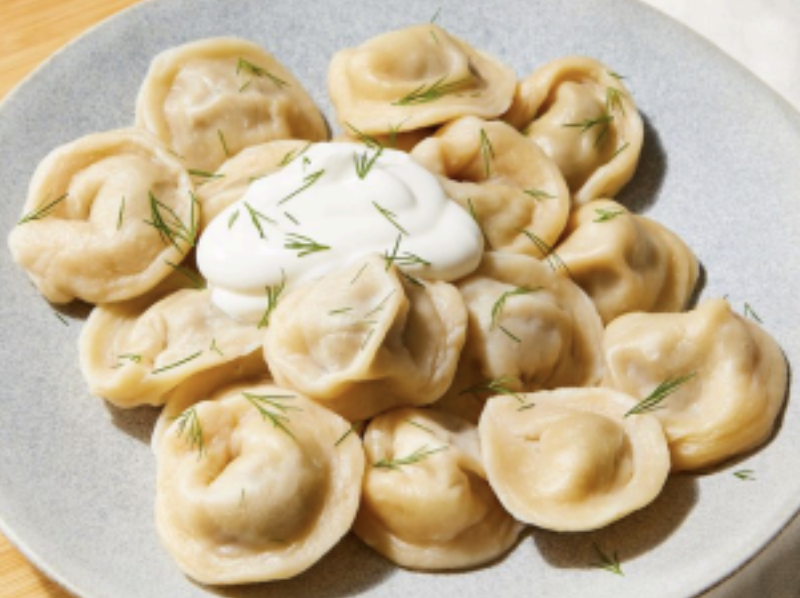
Dumplings are a beloved food found all around the world, from Russia to China to Georgia. Although there is no single accepted origin, nearly every culture has its own version of the dish. Despite their differences, dumplings share similarities that make them comforting and familiar to everyone.
In Slavic countries, dumplings are called pelmeni. These are usually filled with ground meat, wrapped in dough, and sprinkled with pepper. They are often served hot with sour cream, and can even be added to soups during the cold winter months. Pelmeni are usually boiled, though sometimes they are pan-fried for a richer flavor.
Across Asia, dumplings take on many forms. Guo tie (potstickers) are filled with meat and vegetables, fried until golden on the bottom, and then steamed to cook through. They are served with dipping sauces and are a popular appetizer in many Asian restaurants. Wontons, on the other hand, use a thinner dough and are most often served in soup. Xiaolongbao are soup dumplings filled with pork and aspic; when steamed, the aspic melts into broth, so each bite contains both soup and dough.
In Georgia, dumplings are known as khinkali. These are filled with meat and broth, wrapped in a thick dough, and shaped with many folds at the top. Eating khinkali can be tricky—you must flip them upside down and take small bites so the broth doesn’t spill out. The number of folds even shows the skill of the cook: the more pleats, the better!
Although pelmeni are most common in Russia and Belarus, many historians believe they came from China. In fact, pelmeni and Chinese jiaozi are very similar in recipe. It is thought that people brought dumplings across the Ural Mountains in the 19th century, blending traditions. Chinese dumplings themselves are linked to the Han Dynasty, when the physician Zhang Zhongjing made them with meat and herbs to help neighbors fight off frostbite in the winter. Khinkali, meanwhile, are believed to have originated in Georgia but have since spread around the world, appearing in restaurants far beyond their home country.
While the fillings and cooking styles vary, dumplings share a common story: they were originally foods meant to keep people warm and nourished in difficult times. Today, they remain an internationally loved dish that connects cultures through flavor, comfort, and history.