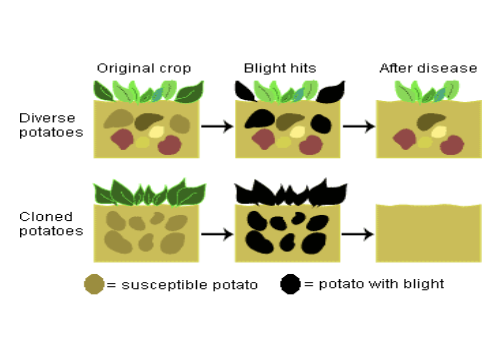
Throughout history, hardships such as famine have forced people to survive with very limited resources. In Ireland, the 1840s was a crucial time when families had to figure out how to make food from what they had, since supply was scarce. Before the famine, potatoes were the main staple of the Irish diet because they were easy to grow in Ireland’s climate, highly nutritious, efficient to produce, and could be stored through the winter. Because of this abundance, Ireland’s population grew rapidly. But when a fungal disease called Phytophthora infestans spread, it destroyed the potato crops and began the tragedy known as the “Irish Potato Famine.” This period was significant because it showed how the Irish tried to adapt and survive despite scarcity.
So what did Irish meals look like during this time? Since most potatoes were ruined, people relied more on foods like rice, grains, cornmeal (often called “Indian meal”), and oatmeal. Soups also became important. Soup kitchens, called famine pots, were set up with international aid from countries like England and the United States. The meals made in these pots were often very basic and not especially healthy because ingredients were limited. For example, when milk wasn’t available, people used treacle and water instead. A typical famine pot could hold 92 gallons of water, 69 pounds of flour, 20 pounds each of parsnips and turnips, 7 pounds of beets, 7 pounds of onions, 14 ounces of pepper, and 7 ½ pounds of salt. Although simple, these kitchens were essential for survival, and they showed the resilience of the Irish people.
How is the famine remembered today?
The “Irish Potato Famine” is still taught in history classes as a major event. One key lesson is how dangerous it can be to rely too heavily on one single crop with little genetic variety. Potatoes are also remembered in Ireland as a symbol of resilience. They remain an important part of Irish culture, especially during March. For example, dishes like Colcannon, which features potatoes, are often made on St. Patrick’s Day to honor this history. Many families also use potatoes in their cooking to remember traditions and the struggles of earlier generations.
Potatoes are now seen as much more than a survival food. They carry a history and a cultural meaning that grew out of hardship. The famine shows how food can become both symbolic and deeply tied to identity. Who knew a potato could hold so much power?